
PEEK in Aerospace: A High-Performance Polymer for Flight-Critical Components
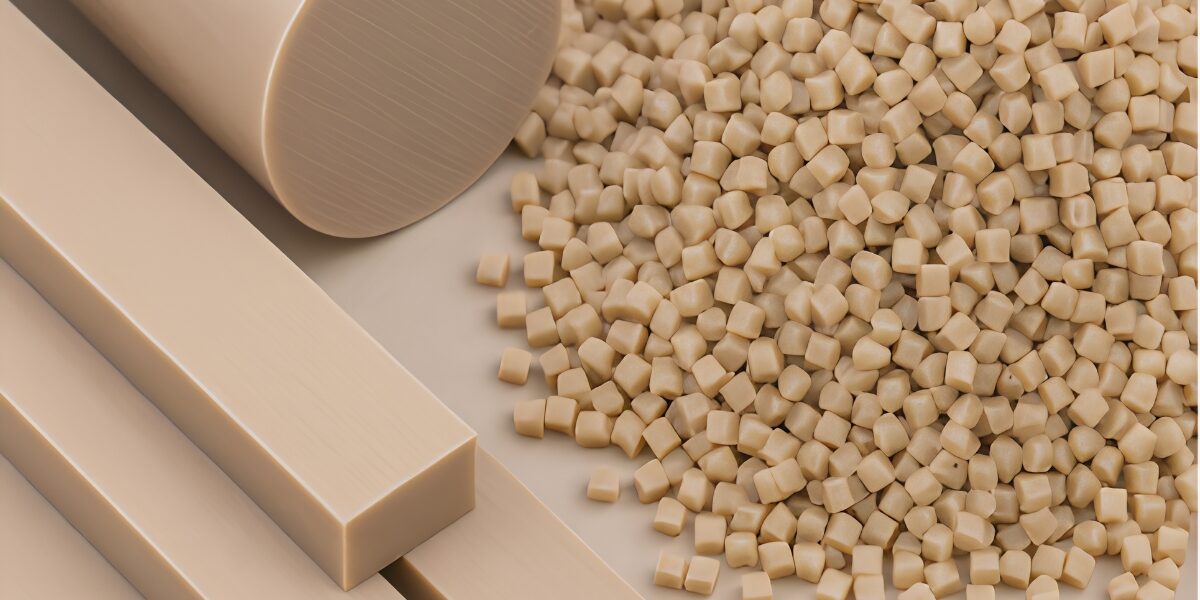
PEEK for Flight-Critical Components
PEEK (polyetheretherketone) is a semi-crystalline thermoplastic engineered for environments that destroy conventional polymers and many metals. For aerospace applications, PEEK delivers a combination of properties that no other engineering plastic matches: continuous service to 500°F (260°C), inherent flame retardancy that supports FAR 25.853 compliance, and a strength-to-weight ratio that makes it a direct replacement for aluminum and steel in non-structural and semi-structural assemblies.
At Precise Aerospace, we mold, machine, and assemble close-tolerance components from advanced engineering materials including PEEK, Ultem, Torlon, and Ryton for aerospace and defense programs. Since 1965, we’ve specialized in the kind of tight-tolerance, high-performance polymer work that aerospace demands. Here’s how PEEK is used across the sector and what to consider when specifying it.
Why Aerospace Engineers Specify PEEK
PEEK gets called out in specs where standard engineering thermoplastics like nylons, acetals, polycarbonates can’t survive the operating environment, and where switching from metal offers weight, corrosion, or lifecycle cost advantages.
High strength-to-weight ratio. PEEK delivers mechanical performance comparable to some metals at a fraction of the weight. In aircraft structures, every gram matters. PEEK brackets, clips, and fasteners replace aluminum and steel components without sacrificing the mechanical properties the assembly demands.
Thermal stability. Continuous service to 500°F (260°C) with short-term excursions well beyond that. PEEK maintains dimensional stability and mechanical properties at temperatures where nylons, polyesters, and even some fluoropolymers begin to deform or degrade. This makes PEEK useful for engine-adjacent environments, electronics bays, and areas exposed to sustained thermal cycling.
Flame, smoke, and toxicity (FST) compliance. PEEK is inherently flame-retardant with low toxicity combustion gases and qualified PEEK grades and finished components support FAR 25.853 flammability requirements for aircraft interiors. FST compliance is the property that separates PEEK from nearly every other engineering plastic in aerospace. Compliance is validated for the specific grade, thickness, geometry, and program requirements for every PEEK part.
Chemical and environmental resistance. PEEK resists jet fuel, hydraulic fluids, de-icing chemicals, and the cleaning agents used in aircraft maintenance, extending component life and reducing replacement cycles. It also absorbs minimal moisture, maintaining dimensional stability in humid and marine operating environments. Material compatibility should still be confirmed for specific media, concentration, and temperature combinations.
Wear resistance and dimensional stability. PEEK’s low friction, fatigue resistance, and creep resistance make it a standard material for components that slide, seal, or bear load. Filled PEEK grades, like carbon-fiber, glass-fiber, or bearing-grade formulations, provide enhanced stiffness, wear resistance, and load-bearing capacity for high-cycle applications.
PEEK Aerospace Applications
| Requirement | Why PEEK Helps | Example Applications |
| Weight reduction | High strength-to-weight ratio | Brackets, clips, housings, covers |
| Heat resistance | Maintains properties at elevated temperatures | Engine-adjacent parts, electronics housings, high-temp assemblies |
| Chemical resistance | Resists fuels, fluids, solvents, cleaning agents | Fluid-exposed parts, maintenance-exposed components |
| Dimensional stability | Low moisture absorption, strong creep resistance | Bushings, sensor housings, precision machined components |
| Wear performance | Fatigue and abrasion resistance | Bearings, bushings, actuator and linkage components |
| Electrical insulation | Strong dielectric properties | Connector housings, insulators, electronic component carriers |
| FST compliance | Inherent flame retardancy, low toxicity combustion | Aircraft interior components (grade/program validated) |
Structural brackets, clips, and fasteners. PEEK replaces aluminum and steel in brackets, cable guides, and fastening systems, reducing weight while meeting FST requirements. In aircraft interiors, PEEK components provide the dimensional stability needed for precision-fit assemblies in overhead compartments, seat structures, and panel systems.
Bearings and bushings. PEEK’s low friction and self-lubricating properties make it a standard material for bearings and bushings in flight control linkages, actuator assemblies, and landing gear components. Carbon-fiber and glass-fiber reinforced PEEK grades provide enhanced wear resistance for high-cycle applications. We work with both glass and carbon-filled grades, with up to 40% ash content.
Wire and cable management. PEEK cable ties, clamps, and conduit components survive the thermal cycling and chemical exposure in engine compartments and unpressurized fuselage sections. These are environments where standard nylon components fail within months.
Electronic and sensor housings. PEEK’s electrical insulation properties, thermal stability, and chemical resistance make it a strong fit for sensor enclosures, connector housings, and electronic component carriers in avionics and defense electronics. The ability to mold or machine close-tolerance polymer parts is especially valuable in these applications.
PEEK Manufacturing Capabilities at Precise
Precise processes PEEK across multiple platforms, giving engineers flexibility to match the right process to the application:
Injection, compression, and transfer molding — our 40- to 610-ton presses handle complex PEEK geometries with the tight tolerances that aerospace applications demand. We work with unfilled, glass and carbon-fiber filled with up to 40% ash content , glass-fiber filled, and bearing-grade PEEK resins. We have also processed major PEEK brands such as Sabic Thermocomp, Victrex, and RTP.
CNC machining — 4- and 5-axis turning and milling for low-volume, tight-tolerance PEEK components. Parts up to 50″ × 26″ × 25″ with tolerances to ±.0005″.
Value-added assembly — build-to-print assembly including ultrasonic welding, bonding, soldering, and hardware insertion. PEEK components ship as finished assemblies, not just molded parts. This reduces vendor complexity and shortens lead times.
Quality and traceability — AS9100, ISO 9001, Honeywell EMS52397, Honeywell HPS1023, and Boeing D6-51991 approvals. Full material and process traceability for defense and commercial aerospace programs.
A Manufacturing Partner You Can Depend On
For more than 60 years, Precise Aerospace has partnered with aerospace OEMs and Tier suppliers to manufacture complex engineered components through injection molding, compression molding, machining, extrusion, and value-added assembly. Supported by AS9100 and ISO 9001 certified quality management systems, comprehensive material expertise, state-of-the-art equipment, and aerospace standard traceability, Precise serves as a trusted partner for PEEK applications across commercial, military, and business aviation platforms.
Interested in learning more?
Since 1965, Precise Aerospace Manufacturing has specialized in close-tolerance molding, CNC machining, and value-added assembly for aerospace, defense, medical, and electronics customers. If you’re looking to specify PEEK for a flight-critical application, contact our engineering team to discuss material selection, tooling, and production.
Frequently Asked Questions
What is PEEK used for in aerospace?
PEEK is used for aerospace components that require high temperature resistance, chemical resistance, low moisture absorption, dimensional stability, and weight reduction. Common application categories include brackets, clips, bushings, bearings, housings, cable-management components, electrical-insulation parts, and wear components.
Why use PEEK instead of metal in aircraft components?
PEEK reduces weight, resists corrosion, provides electrical insulation, and maintains mechanical properties at elevated temperatures. It’s most effective when the application benefits from polymer performance and the specific grade and geometry meet program requirements.
Does PEEK meet aerospace flame, smoke, and toxicity requirements?
Qualified PEEK grades and finished components support aerospace FST requirements, including FAR 25.853 for aircraft interior applications. Compliance is validated for the specific grade, thickness, geometry, and program, not a blanket property of every PEEK part.
Can Precise manufacture PEEK aerospace components?
Precise Aerospace processes PEEK through injection molding, compression molding, transfer molding, 4- and 5-axis CNC machining, and value-added assembly for close-tolerance aerospace and defense components.
About the Authors
Jon Cato is a partner with Precise Aerospace’s Marketing Department.
Jenifer Juarez is the Marketing Director at Pexco, where she leads brand, digital strategy, SEO/GEO, and demand generation for North America’s largest plastic extrusion and injection molded components manufacturer. She works directly with Pexco’s engineering and applications teams to translate complex polymer science into content that helps engineers and procurement professionals make informed material decisions.
Kassandra Morales is the Demand Generation Specialist at Pexco, where she supports demand generation and digital marketing for the company’s traffic safety and fence privacy product lines. Alongside these markets, she also fulfills the demand generation role at Precise Aerospace. She develops targeted campaigns, technical content, and digital programs that help strengthen market visibility, support distributor engagement, and generate qualified pipeline growth.
This article was reviewed for technical accuracy by Paul Overbaugh, Plant Manager at Precise Aerospace, and Tony Pham, Engineering Manager at Precise Aerospace.