
Aircraft Interiors: Materials, Manufacturing, and Cabin Performance
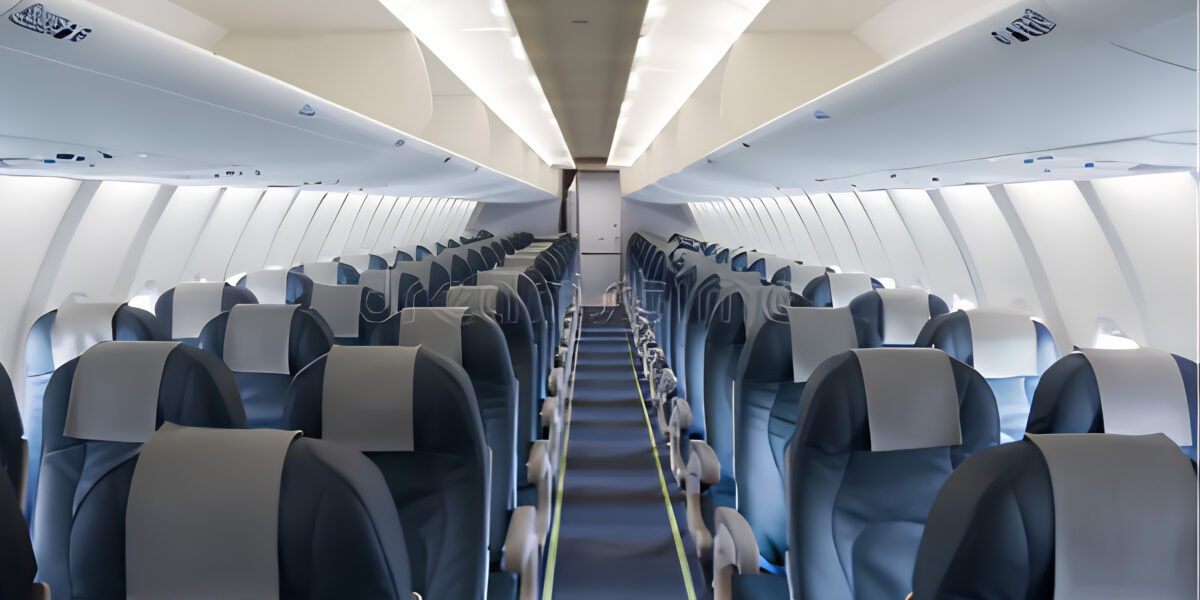
Where Cabin Appearance Meets Aerospace Performance
Aircraft interiors are designed to make travel feel comfortable, intuitive, and dependable. Behind that passenger experience is a complex network of components that must meet exacting requirements for fit, cosmetic qualities, durability, safety, and long-term performance.
A reading-light lens must maintain its clarity and color. A seat component must operate reliably through repeated use. A track cover must fit precisely while resisting wear.
These requirements make aircraft cabin interiors one of the aerospace industry’s most challenging manufacturing environments. Passenger-facing appearance must be balanced with high-cycle mechanical performance, flammability requirements, chemical resistance and reliable operation across decades of service and tens of thousands of flight cycles.
Precise Aerospace helps manufacturers meet those challenges with custom-engineered polymer, metal and hybrid components manufactured for demanding aircraft interior applications. From precision lighting lenses to seating components, our products are supported by an AS9100-certified aerospace quality system.
Tight Tolerances Make a Visible Difference
In an aircraft cabin, precision affects more than mechanical performance. It also influences how the finished interior looks, feels, and functions.
Dimensional variation can create gaps between trim components, uneven interfaces around cabin monuments, binding in moving mechanisms, or inconsistent alignment across an assembly. For lighting applications, dimensional stability can also affect how a lens fits within its housing and distributes light throughout the cabin.
Precise Aerospace combines injection molding, compression molding, transfer molding, and CNC machining to produce complex aerospace components with a high degree of repeatability. Our 3-, 4- and 5-axis milling and multi-axis turning machining capabilities support complex geometries and tolerances as tight as ±0.0005 inches, depending on the component, material and program requirements.
That precision helps customers achieve consistent fit during assembly, dependable operation in service, and a high-quality finished cabin appearance.
What Aircraft Interior Components Does Precise Aerospace Manufacture?
Precise manufactures lighting lenses, seating components, seat track covers, seals, profiles, trim parts and precision components for environmental control systems.
These capabilities support both passenger-facing cabin applications and less-visible mechanical systems, including:
- Cabin reading-light lenses and diffusers
- Passenger service unit lighting components
- Seat-pan parts, tray-table elements and seat hardware
- Extruded and molded seat track covers
- Overhead-bin and cabin-monument seals
- Thermoplastic trim profiles and decorative end caps
- Ducting, connectors and environmental-control interfaces
Precise supports new-build, retrofit and aftermarket programs with molding, extrusion, machining, assembly and engineering services.
How Does Precise Aerospace Support Aircraft Cabin Lighting Systems?
Precise Aerospace manufactures molded lenses, diffusers and custom profiles for aircraft lighting systems that require optical clarity, dimensional stability, and consistent fit.
Applications include cabin reading lights, passenger service units, aisle lighting, emergency lighting, ceiling systems, LED covers, and custom lens profiles.
Depending on the program, Precise can produce injection- and compression-molded components using optical-grade polycarbonate, acrylic and other application-specific materials. Durayl® lenses and LED covers are also available for applicable lighting programs.
Aircraft lighting components must do more than transmit or diffuse light. They must also maintain their appearance, geometry and color over an extended service life while integrating cleanly with surrounding cabin structures.
Precise works with customers to evaluate:
- Optical requirements
- Component geometry
- Material performance
- Molding method
- Environmental exposure
- Surface-finish expectations
- Production repeatability
This engineering-led approach helps ensure that each component is designed not only to meet the drawing, but also to perform as part of the complete lighting assembly.
How Does Precise Aerospace Support Aircraft Cabin Seating Components?
Aircraft seating systems depend on numerous small, highly engineered parts. Precise manufactures tight-tolerance seat-pan components, hardware, tray-table elements and structural seat subcomponents in high-performance thermoplastics.
Material selection can be tailored around the application’s strength, weight, wear, temperature, and chemical-resistance requirements. Where needed, precision machining and molding can be combined to produce complex features, controlled interfaces, and repeatable assembly dimensions.
Precise also produces extruded and molded seat track covers that provide durable protection for floor-track systems. These profiles are manufactured for precise fit, wear resistance, and alignment with applicable cabin flammability requirements.
By controlling both the geometry and material characteristics of these components, Precise helps customers address two critical priorities at once: reliable performance beneath the surface and a clean, finished appearance throughout the cabin.
How Are Seals, Profiles, and Trim Used Throughout an Aircraft Cabin?
Custom seals, profiles and trim components close gaps, protect interfaces, support movement and create finished transitions between aircraft cabin structures.
Overhead bins, galleys, dividers, and other cabin monuments frequently require custom profiles that must conform precisely to surrounding structures. Even modest dimensional inconsistencies can affect closure performance, create uneven gaps, or complicate final installation.
Precise manufactures custom-extruded elastomeric seals and thermoplastic profiles for:
- Overhead-bin closures
- Galley interfaces
- Cabin divider systems
- Monument transitions
- Environmental-control interfaces
- Decorative and protective trim applications
Precise also manufactures injection-molded end caps and finishing components with cabin-grade surface finishes and color.
A broad extrusion-material portfolio allows each profile or seal to be matched to its specific requirements for flexibility, chemical resistance, thermal stability, strength, friction and appearance.
Materials Expertise for Demanding Cabin Applications
No single material is right for every aircraft interior component. A transparent lighting lens, structural seat part, and low-friction bushing each present a different set of performance requirements.
Precise Aerospace processes a wide range of aerospace materials, including:
- Ultem®, Torlon®, PEEK, Ryton®, PPS, PSU and Udel®
- PTFE, filled PTFE and other fluoropolymer compounds
- Polycarbonate, acrylic, ABS and styrene
- Nylon, POM, phenolic and DAP
- Aerospace elastomers
- Stainless steel, aluminum and brass
- Polymer-and-metal hybrid constructions
The Precise engineering team supports customers with design-for-manufacturability guidance, materials selection, and reverse engineering. Components can be optimized around strength, weight, temperature exposure, chemical resistance, friction, wear and production cost. Precise can also help re-engineer obsolete or unavailable parts for legacy and aftermarket aircraft programs.
Aerospace Quality from First Article to Production
Precise verifies aircraft interior components through certified quality systems, dimensional inspection, material traceability, and aerospace documentation.
Precise operates AS9100- and ISO 9001-certified quality systems and supports full material traceability and first article inspection in accordance with AS9102 requirements. The company is also ITAR registered and identifies CMMC Level 2 among its certifications and compliance capabilities.
Its quality-assurance resources include CMM inspection equipment and trained inspectors focused on maintaining dimensional compliance. Integrated production and quality systems support tracking from the beginning of a project through delivery.
For aircraft interior manufacturers, this disciplined approach helps support:
- Drawing and specification compliance
- Repeatable production quality
- Material and process traceability
- First article documentation
- Dimensional verification
- Long-term program continuity
Why Choose Precise Aerospace for Aircraft Interior Applications?
Precise Aerospace combines tight-tolerance manufacturing, advanced materials expertise and quality controls to support demanding aerospace cabin interior applications.
Since 1965, the company has provided thermoplastic solutions, precision machining, and engineering support for aerospace and defense customers. Its core capabilities include injection, compression and transfer molding, CNC machining, assembly, and testing.
Whether the component is visible to every passenger or concealed inside a seat, monument, or environmental-control assembly, it must fit impeccably and perform reliably.
Ready to Get Started?
Whether you are developing lighting systems, seating assemblies, trim profiles, cabin monuments, seals, or difficult-to-source replacement parts, Precise Aerospace can help identify the right material and manufacturing solution. Contact our team to discuss your aircraft interior application at ww.precisemfg.com/contact/
Frequently Asked Questions
What aircraft interior components does Precise Aerospace manufacture?
Precise Aerospace manufactures tight-tolerance molded and machined components for aircraft seating, lighting, cabin monuments and interior finishing systems. Applications include lighting lenses and diffusers, seat-pan components, tray-table elements, seat hardware, seat track covers, overhead-bin seals, custom profiles, end caps and decorative trim.
What performance requirements must aircraft cabin components address?
Aircraft cabin components must balance dimensional accuracy, durability, cosmetic qualities, weight, and applicable flammability requirements. Depending on the application, manufacturers may also need to account for wear resistance, optical clarity, color consistency, and repeated mechanical use over an extended service life.
How can aerospace manufacturers improve consistency during cabin assembly?
Manufacturers can improve assembly consistency by using components produced with controlled dimensions, repeatable processes, and verified tolerances. Accurate parts help reduce gaps, misalignment, binding and installation adjustments in seating systems, lighting assemblies, floor tracks, overhead bins, and cabin monuments. Precise supports complex geometries with machining tolerances as tight as ±0.0005 inches, depending on the material and application.
What should engineers consider when specifying polymers for passenger-facing parts?
Engineers should evaluate flammability performance, strength, weight, surface finish, colorability, wear resistance, and long-term dimensional stability. The appropriate material depends on the component’s location, mechanical loads, environmental exposure, and appearance requirements. Precise works with materials including Ultem®, Torlon®, PEEK, PPS, polycarbonate, acrylic, ABS, nylon and POM.
How can cabin lighting components maintain optical quality over time?
Cabin lighting components require stable materials and repeatable manufacturing processes to maintain clarity, color, and dimensional accuracy throughout their service life. Precise manufactures injection- and compression-molded lenses and diffusers for reading lights, passenger service units, aisle lighting, emergency lighting and ceiling systems using optical-grade polycarbonate, acrylic and other application-specific materials.
Can obsolete aircraft interior parts be reproduced for retrofit programs?
Obsolete or unavailable cabin components can often be reproduced through reverse engineering, material evaluation and design-for-manufacturability support. This capability helps aerospace OEMs, Tier suppliers and aftermarket providers address aging aircraft platforms, supplier discontinuations and difficult-to-source replacement parts while maintaining appropriate documentation and inspection controls.
What certifications should aircraft interior component suppliers maintain?
Suppliers should maintain quality systems such as AS9100 and ISO 9001 while supporting material traceability, aerospace documentation, dimensional inspection, and first article inspection requirements.
About the Authors
Jenifer Juarez is the Marketing Director at Pexco, where she leads brand, digital strategy, SEO/GEO, and demand generation for North America’s largest plastic extrusion and injection molded components manufacturer. She works directly with Pexco’s engineering and applications teams to translate complex polymer science into content that helps engineers and procurement professionals make informed material decisions.
Kassandra Morales is the Demand Generation Specialist at Pexco, where she supports demand generation and digital marketing for the company’s traffic safety and fence privacy product lines. Alongside these markets, she also fulfills the demand generation role at Precise Aerospace. She develops targeted campaigns, technical content, and digital programs that help strengthen market visibility, support distributor engagement, and generate qualified pipeline growth.
This article was reviewed for technical accuracy by Paul Overbaugh, Plant Manager at Precise Aerospace, and Tony Pham, Engineering Manager at Precise Aerospace.